 Subscribe by RSS
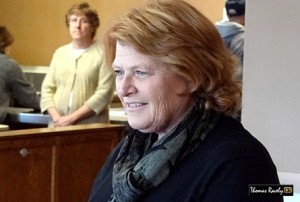 Washington DC (CSi) During a U.S. Senate hearing aimed at addressing challenges with the federal workforce, U.S. Senator Heidi Heitkamp highlighted the harmful impact of the federal hiring freeze – which not only stunts the federal government’s ability to improve efficiency, but also has a detrimental impact on the ability of the federal government to help the private sector, support private sector workers, and enable North Dakota communities thrive.
As the ranking member on the U.S. Senate Committee on Homeland Security and Governmental Affairs Subcommittee on Regulatory Affairs and Federal Management, Heitkamp is continually striving to improve not only the federal hiring process, but to make sure federal agencies are working as effectively as possible so that North Dakota communities are better served. At the hearing, key federal employee and management leaders – including from the U.S. Air Force – agreed with Heitkamp’s concerns regarding the potential for long-lasting detrimental impacts from arbitrary cuts and freezes to federal employee hiring on national security, food safety, veterans services, and other critical services North Dakota communities depend on. Heitkamp also spoke about the need for her supervisor training bill, which she introduced last Congress, to make sure federal managers are properly trained to manage employees and run programs more effectively.
“North Dakota communities count on well-run federal programs every day to protect them from security threats, keep our food safe, and care for our veterans,” said Heitkamp. “That’s why I share the deep concerns expressed by federal leaders of employees and managers about the chilling impact a federal hiring freeze could have on their abilities to effectively serve our communities and support private sectors businesses and workers. As a leader on the Senate subcommittee tackling federal workforce issues, I’m committed to taking on challenges with hiring and retaining quality federal employees – but an overbroad hiring freeze could stunt those improvements, leaving services North Dakota communities depend on in limbo. Going forward, I’ll be looking for ways to train federal managers and supervisors to do their jobs effectively, and to stay in constant communication with the Administration on its plans to implement its federal workforce plans so the potential impact on North Dakotans is reduced.”
This hearing builds on Heitkamp’s work to underscore the need to address chronic federal agency challenges with recruiting and retaining federal workers. In July 2016, Heitkamp introduced her Flexible Hiring and Improving Recruitment, Retention, and Education (Flexible HIRE) Act to help the federal government hire and retain the effective, vibrant federal workforce needed to support local communities and businesses across the nation – particularly in areas where remoteness or unique economic circumstances create hiring challenges. By providing federal agencies a toolkit of resources to make hiring and human resources more flexible, Heitkamp’s bill directly responds to concerns she heard directly from federal agencies, businesses, and workers in North Dakota about filling critical positions in law enforcement, Indian Country, energy, and national security. In December, Heitkamp helped introduce the bipartisan Customs and Border Protection Hiring and Retention (CBP HiRe) Act aimed at improving recruitment and retention on our national borders.
In May 2015, Heitkamp led a Senate hearing on how to improve the federal workforce by encouraging more millennial workers to pursue careers in public service and help them develop their talent within the public sector. Last September, she led a follow-up hearing on how to streamline efforts to recruit and retain a younger generation of workers. And last April, she led a roundtable examining the Office of Personnel Management’s ongoing efforts to make sure its jobs portal, USAJOBS, is more accessible to applicants while effectively connecting federal agencies with top talent which also centered on federal efforts to attract and retain millennial workers.
Heitkamp has been spearheading efforts to make sure federal employees – including civilian employees at Minot Air Force Base, scientists, engineers and park rangers – get the support they need to keep pace with the high cost of living across western North Dakota. In September 2014, Heitkamp brought then-U.S. OPM Director Katherine Archuleta to North Dakota to hear firsthand about the challenges federal agencies face in maintaining a workforce in the face of North Dakota’s economic growth. Since Director Archuleta’s visit, three pay rate increases that Heitkamp pushed for have been approved, improving pay for nearly 500 employees across western North Dakota and civilian workers at Minot Air Force Base. While ultimately successful, the process to get those increases approved was inefficient, demonstrating the need to make real changes to federal recruitment and retention systems to make sure the federal government can meet the needs of our nation’s communities and families. That directly led to the introduction of Heitkamp’s Flexible HIRE Act.













Comments are closed
Sorry, but you cannot leave a comment for this post.